What to Expect From a Truck HVAC Service
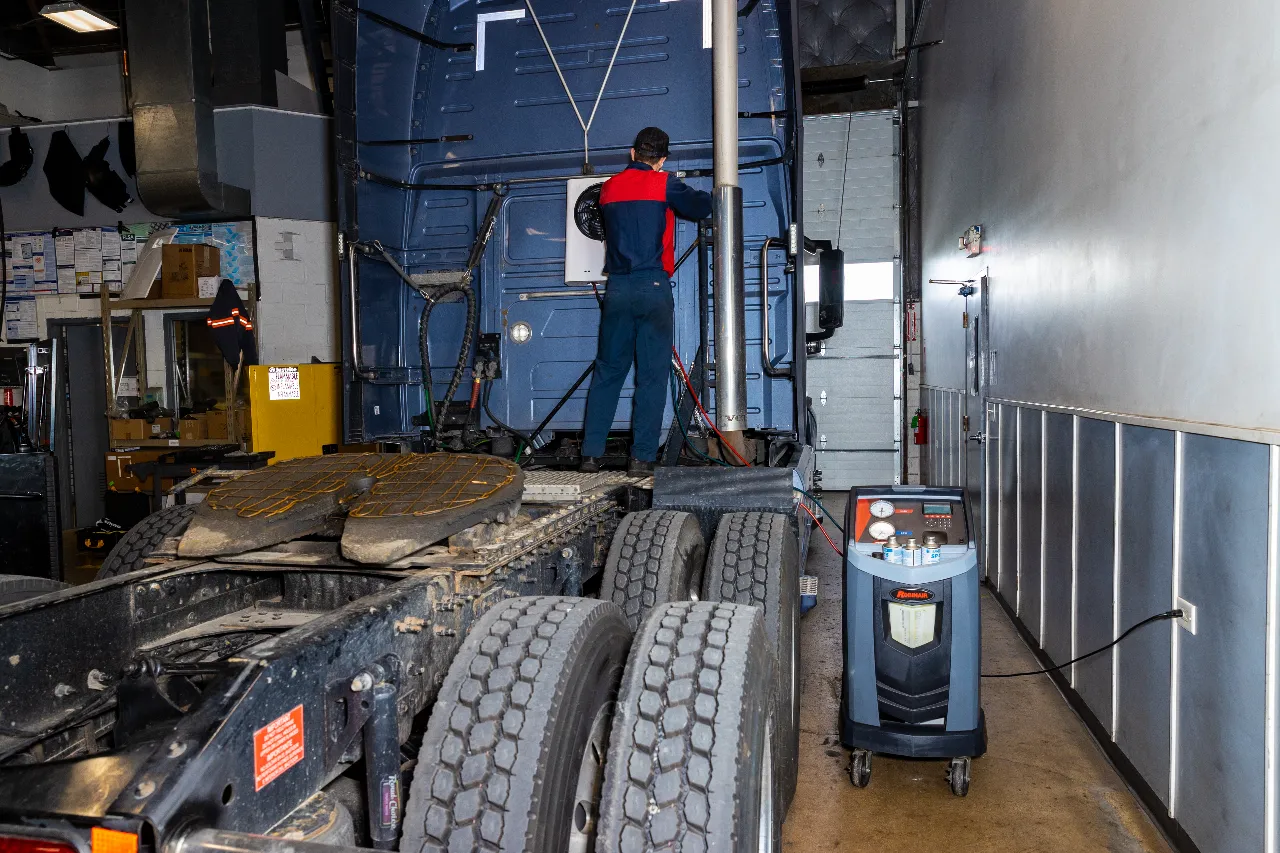
When your cab feels like a sauna in July or an icebox in January, your truck HVAC system becomes far more than just a luxury. In heavy-duty applications, heating and cooling systems work overtime to keep drivers alert, reduce fatigue, defrost windshields, and regulate interior air quality.
So, what actually happens during a professional truck HVAC service? Here we break it down, step by step.
Why Your Truck’s HVAC System Matters More Than You Think
Your heating, ventilation, and air conditioning system does more than push air around. It regulates temperature, controls humidity, and ensures safe visibility through proper defrosting.
In heavy-duty trucks, HVAC systems rely on several integrated components:
- Compressor
- Condenser
- Evaporator
- Blower motor
- Heater core
- Refrigerant lines
- Cabin air filters
The refrigerant cycles through the system, absorbing and releasing heat as it transitions between liquid and gas states. Without proper refrigerant levels or functional components, the system simply can’t do its job.
Step 1: Initial System Inspection and Performance Test
First things first, a mechanic runs a complete performance check. They measure vent temperature output, inspect airflow strength, and look for unusual noises.
Here’s what they’re evaluating:
- Is the air conditioning system blowing cold enough?
- Is the heater producing consistent warmth?
- Does airflow change properly between vents?
- Are there signs of moisture buildup or odors?
Low airflow often points to a failing blower motor or a clogged cabin air filter. Weak cooling? That could indicate low HVAC refrigerant or compressor trouble.
This stage sets the tone. You can’t fix what you haven’t diagnosed.
Step 2: Refrigerant Level Check and Leak Detection
Next up, mechanics check refrigerant levels using specialized gauges. Refrigerant isn’t a “top-it-off” fluid. If it’s low, there’s usually a leak.
Your system operates as a sealed loop. Refrigerant absorbs heat in the evaporator and releases it through the condenser. When levels drop, cooling efficiency plummets.
Technicians may:
- Perform a pressure test
- Use UV dye to detect leaks
- Inspect refrigerant lines and fittings
- Check the compressor clutch engagement
Leaks commonly occur in hoses, seals, or at connection points. Ignoring a leak can damage your AC compressor, and that repair isn’t cheap.
Step 3: Compressor and Belt Inspection
Your compressor is the heart of the diesel truck air conditioning system. It pressurizes the refrigerant and keeps the cooling cycle moving.
Technicians inspect:
- Compressor clutch function
- Mounting integrity
- Electrical connections
- Serpentine belt condition
Since the compressor is belt-driven—similar to components like the alternator or water pump—a worn belt can cause slipping, noise, or total system failure.
If the belt looks cracked or glazed, replacing it during HVAC service prevents future breakdowns.
Step 4: Condenser and Evaporator Evaluation
Your condenser sits near the radiator and disperses heat absorbed from the cab. If it’s clogged with debris, airflow suffers.
During a heavy-duty truck HVAC repair appointment, mechanics will:
- Inspect the condenser for bent fins
- Remove dirt and road debris
- Check for corrosion or leaks
Inside the cab, the evaporator absorbs heat. If mold or debris builds up, you may notice musty odors or weak cooling.
Cleaning these components improves efficiency and prevents long-term damage.
Step 5: Heater Core and Coolant System Check
Heating relies on engine coolant, not refrigerant. Warm coolant flows through the heater core, and the blower motor pushes warm air into the cab. Because coolant systems regulate engine temperature by absorbing and dispersing heat, any issue here affects both engine performance and cabin heat.
Technicians check:
- Heater core for leaks
- Coolant levels and condition
- Heater control valves
- Proper airflow through vents
If your truck isn’t heating properly, the issue may not be HVAC-related at all; it could stem from the cooling system.
Step 6: Electrical System Diagnostics
Modern trucks rely heavily on electronic controls. HVAC systems are no exception.
Technicians may scan for:
- Fault codes
- Sensor failures
- Climate control module issues
- Blower resistor problems
Since heavy-duty trucks depend on battery and alternator output to power electrical components, weak charging systems can cause HVAC malfunctions.
If airflow works intermittently or controls don’t respond correctly, electrical diagnostics are critical.
Step 7: Cabin Air Filter Replacement
You’d be surprised how often a clogged filter causes HVAC complaints.
A dirty cabin air filter restricts airflow and reduces cooling performance. Worse, it allows dust and allergens into the cab. Most mechanics recommend replacing this filter annually or more often if you operate in dusty conditions.
Think of it as cheap insurance for better air quality and system longevity.
Common Problems Found During Truck HVAC Service
During a standard fleet HVAC maintenance visit, technicians often uncover:
- Refrigerant leaks
- Failing compressors
- Worn serpentine belts
- Blocked condensers
- Heater core seepage
- Electrical shorts
Catching these issues early prevents costly roadside breakdowns. After all, nobody wants their defroster failing during a New Hampshire snowstorm.
How Often Should You Schedule HVAC Service?
For heavy-duty trucks, annual inspections are ideal. However, fleet vehicles operating year-round should consider twice-yearly service, once before summer and once before winter.
Preventive maintenance mirrors the same philosophy used throughout heavy-duty systems: identify small issues before they snowball into major failures.
Waiting until the system fails usually means more downtime and higher repair bills.
Signs You Shouldn’t Ignore
If you notice any of the following, don’t wait:
- Warm air when the AC is on
- Weak airflow
- Strange noises when the system runs
- Foggy windows that won’t clear
- Sweet smell inside the cab (possible coolant leak)
- Visible refrigerant leaks
Acting early can mean the difference between a simple recharge and a full system overhaul.
What Makes Professional HVAC Service Worth It?
Heavy-duty HVAC systems are more complex than passenger vehicles. They endure longer run times, higher vibration levels, and extreme seasonal swings.
Professional mechanics use:
- Commercial-grade refrigerant recovery machines
- Pressure testing equipment
- Diagnostic scan tools
- Leak detection dye systems
DIY fixes often miss root causes. And with environmental regulations surrounding refrigerant handling, professional service protects you legally and mechanically.
Stay Comfortable, Stay Productive
Routine truck HVAC service keeps your system running smoothly, extends component life, and prevents costly downtime. If your truck operates in or around Hudson, New Hampshire, seasonal swings make proactive maintenance even more important.
Don’t sweat through summer or shiver through winter. Schedule your inspection before minor issues turn into major repairs.
Recap
A professional truck HVAC service includes inspection, refrigerant testing, compressor evaluation, electrical diagnostics, and heater system checks.
Mechanics assess every component—from condenser to cabin filter—to ensure efficient performance year-round. Staying ahead of problems keeps your fleet reliable, safe, and comfortable in every season.
%20(1).webp)
.webp)
.jpg)